


CityUHK’s FIRST Programme Expands Global South Outreach Through Sustainable Technology Deployment at SEGTA 2026 in Indonesia
03 August 2026
Led by the City University of Hong Kong (CityUHK) and endorsed by the United Nations Educational, Scientific and Cultural Organization (UNESCO) as one of the initiatives under the International Decade of Sciences for Sustainable Development (2024–2033), the Fostering Innovation for Resilience and Sustainable Transformation (FIRST) Programme has expanded its Global South outreach through the “Installation of Cooling Coating Technology for Thermal Comfort Improvement in Gili Iyang Island Community” project. Implemented in collaboration with the Faculty of Advanced Technology and Multidiscipline (FTMM) at Universitas Airlangga (UNAIR), the project formed part of the Sustainable Energy and Green Technology Applications (SEGTA) 2026 programme in Indonesia.

FIRST Programme team and participants from SEGTA 2026 supporting sustainable technology deployment and community engagement activities on Gili Iyang Island.
The SEGTA 2026 programme commenced with an opening ceremony on 30 July 2026, followed by community development activities on 31 July, and concluded on 1 August. The event brought together universities, industry partners, students, and local stakeholders to exchange knowledge and support sustainable development initiatives.
On 31 July 2026, the FIRST team deployed two flagship sustainability technologies in the Gili Iyang Island community, showcasing practical approaches to enhancing thermal comfort and promoting resource circularity. Activities were carried out at KB PAUD Nurul Iman Dungkek, an early childhood education institution located on Gili Iyang Island, Sumenep, Madura, Indonesia.
Although Gili Iyang is widely recognized for its exceptionally high oxygen levels and distinctive natural environment, residents continue to face challenges associated with high temperatures and limited access to reliable electricity. These conditions highlight the importance of affordable, low-energy solutions that can improve everyday living conditions in remote island communities.
Bringing Sustainable Innovations to the Community
KB-TK Nurul Iman currently serves approximately 30 children aged between 2-6 across both Playgroup (Kelompok Bermain/KB) and Kindergarten (Taman Kanak-Kanak/TK) levels. As a key educational institution within the island community, the school provides an important environment for early childhood learning and development. In tropical regions where temperatures are rising, excessive indoor heat can affect comfort, concentration, and overall well-being, making a conducive learning environment increasingly important.
To help address this challenge, the FIRST team applied its electricity-free cooling coating technology to approximately 34 square metres of rooftop area at the school. The passive cooling solution reduces heat absorption and improves indoor thermal comfort without requiring electricity, additional operating costs, or producing carbon emissions. The installation provides a practical example of how sustainable building technologies can enhance existing community facilities in a cost-effective manner.
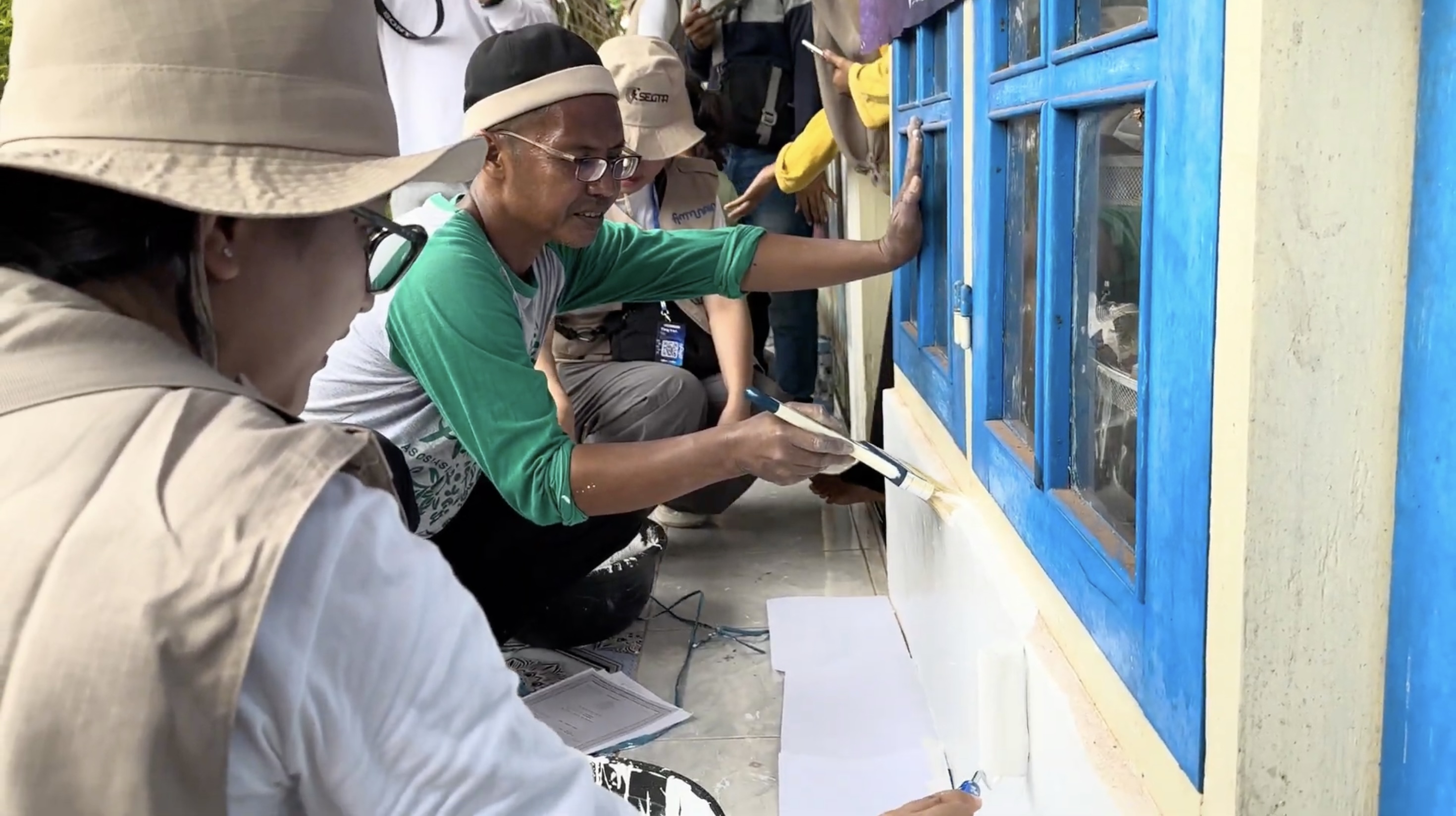
Participants worked together to apply cooling paint to the walls of the educational institution.
Alongside the cooling coating deployment, the FIRST team also promoted its biomass waste-to-value conversion technology concept through community engagement activities. Participants learned that waste cooking oil can be transformed into eco-friendly soap through demonstrations and educational activities designed to promote environmental awareness and sustainable resource management. They also gained hands-on experience using this eco-friendly soap, derived from recycled waste cooking oil, to wash their hands. This interactive activity illustrated that waste materials can be converted into practical and valuable products. The eco-friendly soap was subsequently distributed to participants during the closing ceremony, reinforcing the message that innovation and sustainable practices can create tangible benefits for local communities.
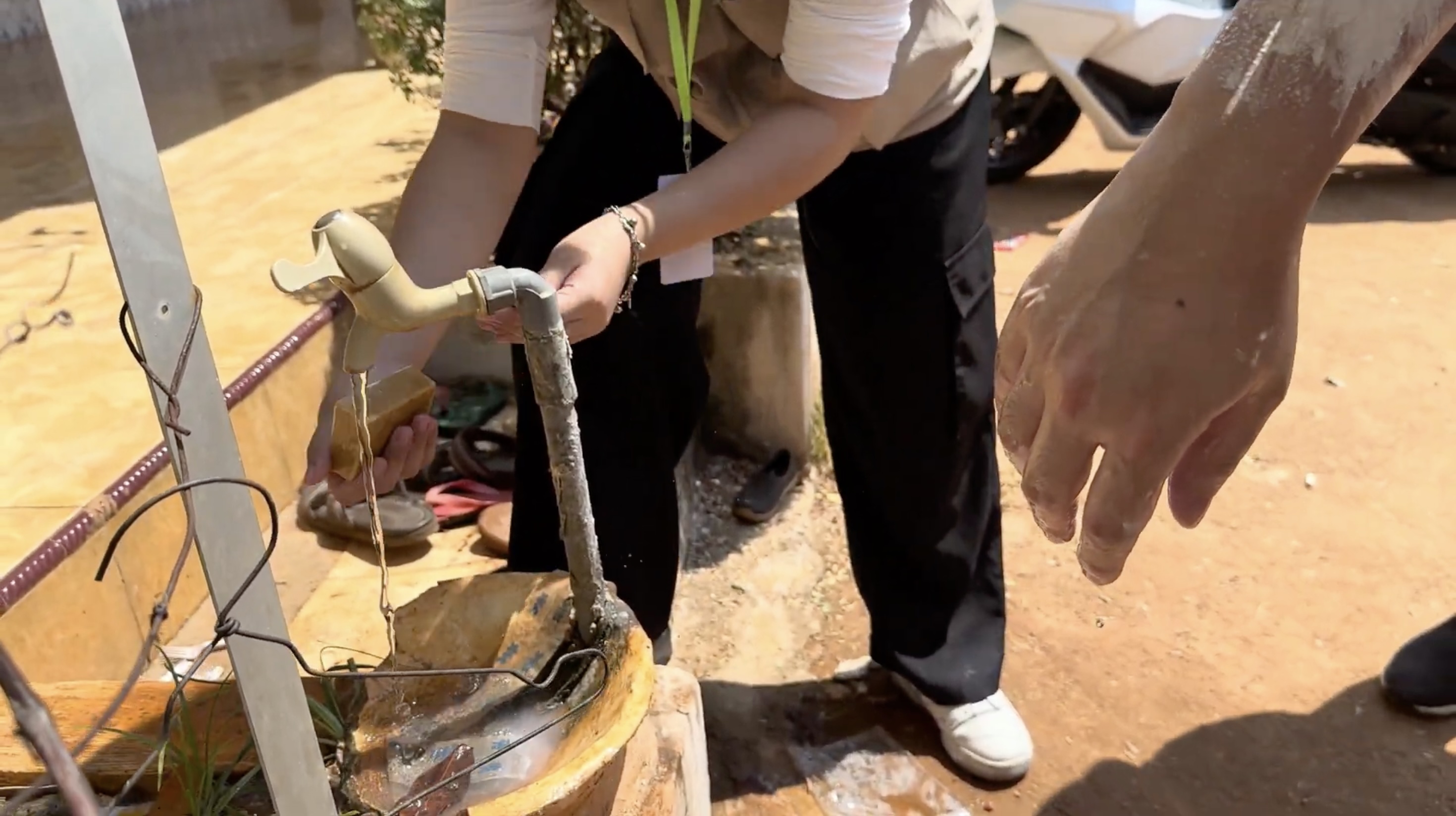
Participants experienced the use of eco-friendly soap produced from recycled waste cooking oil through a handwashing activity.
Together, these activities illustrated how scientific innovation can generate practical benefits while encouraging environmental stewardship and sustainable lifestyles.
International Partnership Driving Community Impact
The FIRST Programme was led by Professor Edwin Tso Chi-Yan, Associate Dean (Internationalisation and Outreach) of the School of Energy and Environment (SEE) at CityUHK, in collaboration with Professor Prastika Krisma Jiwanti, Vice Dean of the FTMM at UNAIR and Person-in-Charge of SEGTA 2026, together with academic staff, students from China, France, Malaysia and Pakistan, and community members from Gili Iyang Island.
SEGTA 2026 brought together more than 100 international students, academics, local volunteers, and community stakeholders, creating opportunities for collaborative learning and field-based technology implementation.
The programme's emphasis on serving remote and underprivileged communities aligns closely with the objectives of FIRST, underscoring the shared commitment of both programmes to advancing the United Nations Sustainable Development Goals (SDGs) and delivering meaningful social impact for communities through sustainable, people-centred solutions. Through partnerships such as SEGTA, CityUHK continues to apply research expertise and technological innovation in real-world settings, working alongside local communities to develop solutions that respond to local challenges and priorities.
Building a Long-Term Partnership for Sustainability
The success of SEGTA 2026 has further strengthened the relationship between CityUHK and UNAIR, laying the groundwork for continued collaboration in sustainable technology development, education, and community engagement.
The partnership highlights the value of international academic cooperation in addressing societal and environmental challenges through shared expertise and knowledge exchange.
In recognition of its contributions to SEGTA 2026, the FIRST Programme received the “Best Partner in Community Development” Award, acknowledging its efforts in supporting community empowerment through science-based solutions, education, and innovation.
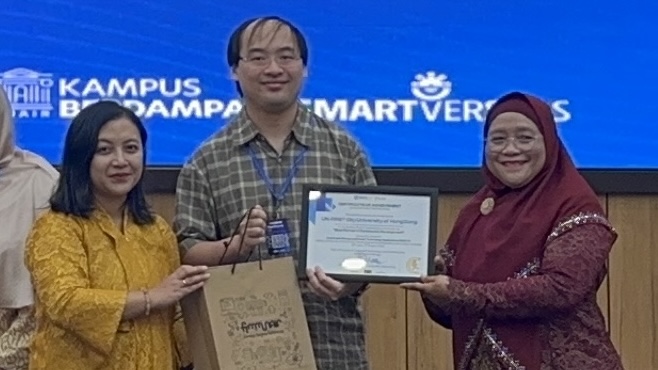
The FIRST Programme received the “Best Partner in Community Development” Award at SEGTA 2026, presented by Professor Prastika Krisma Jiwanti (left), Vice Dean of FTMM, and Professor Retna Apsari (right), Dean of FTMM.
Looking ahead, Professor Prastika Krisma Jiwanti expressed her commitment to expanding future collaborations on Gili Iyang Island. Building on the partnership established through SEGTA 2026 and the FIRST Programme, she noted that FTMM will continue to introduce new collaborative initiatives and innovative technologies to support community development, including solutions that promote environmental sustainability and create economic value for local residents.
As Professor Edwin Chi-Yan Tso noted, science delivers its greatest value when it empowers communities, not only through technological advancement but also through education, participation, and capacity building. Through initiatives such as SEGTA 2026, the FIRST Programme continues to demonstrate how research and innovation can create meaningful benefits for communities while supporting sustainable development across Asia and beyond.